Privacy in the age of mass surveillance

Why Privacy Matters More Than Ever

Three trends are converging right now that should terrify anyone paying attention. Each one alone would be concerning. Together, they fundamentally change the privacy calculus. Let me explain why privacy matters more in 2026 than at any point in human history. Trend 1: Mass Data Collection Is Complete This isn’t news. We’ve known for over a decade that every email, every text message, every phone call, every location ping, every purchase, every search query is being collected somewhere. The Snowden revelations were 2013. We’ve had thirteen years to process this. ...

February 2, 2026 · 6 min read · Tom Meurs
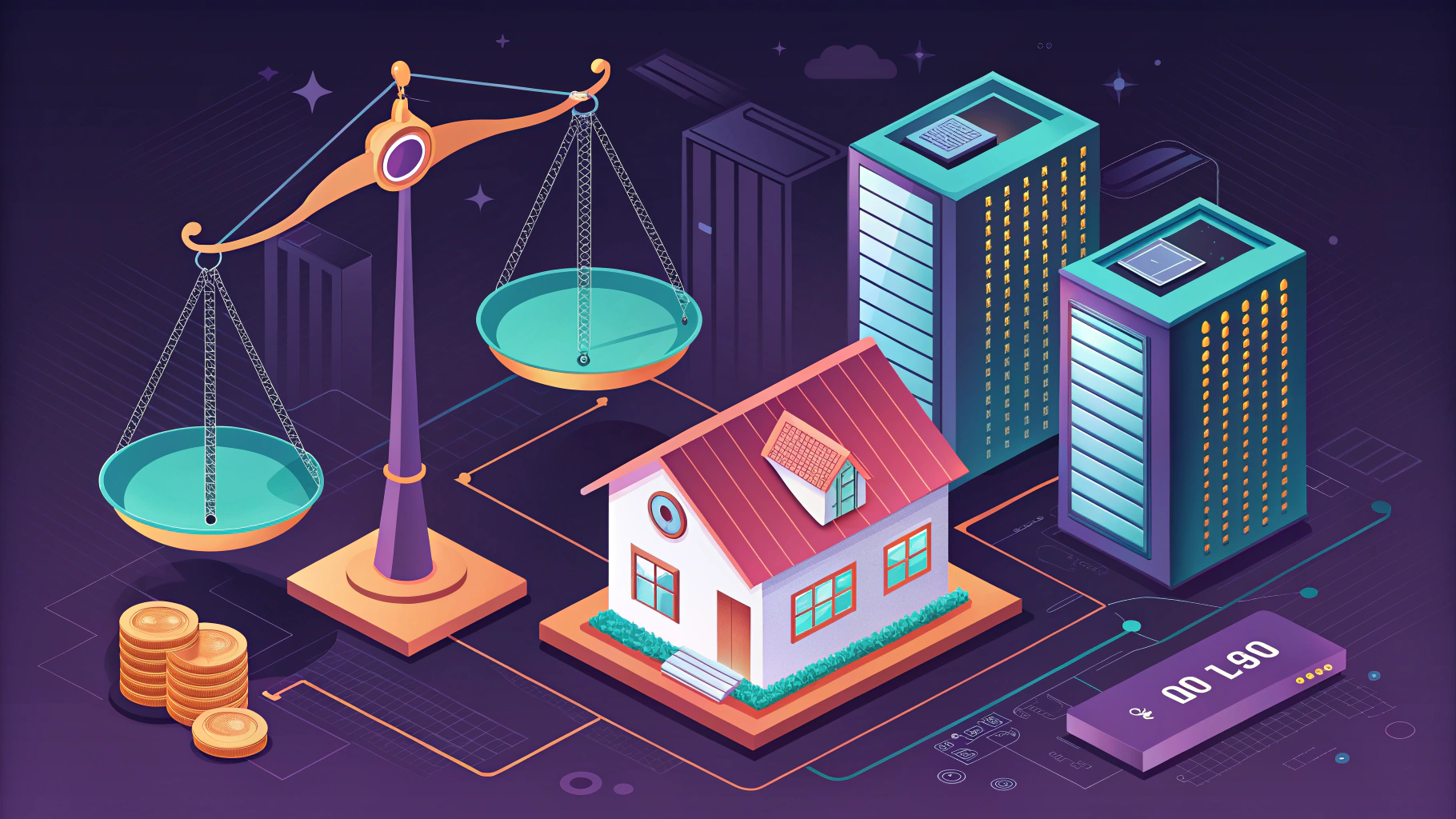
Hardware ownership economics visualization

The Hardware Ownership Paradox: When Sovereignty Gets Expensive

In my previous post about self-hosting for everyone, I painted a vision of managed self-hosting where anyone can own their data. But there’s an uncomfortable truth I glossed over: hardware costs money, and the economics are fundamentally different for businesses versus individuals. Let’s talk about the elephant in the server room. The Financial Reality When a business buys a €1,000 server, here’s what actually happens: Factor Business Individual VAT Deductible (€0 net) €210 lost Corporate tax benefit ~25% deduction (€197) None Write-off 5 years depreciation Just an expense Cash flow Business expense After-tax income Net cost ~€593 €1,000 A business effectively pays 40% less for the same hardware. But it gets worse. ...

January 30, 2026 · 5 min read · Tom Meurs
Self-hosting infrastructure visualization

Self-Hosting for Everyone: A Vision for Digital Agency

What if you could have complete control over your email, your photos, your documents, your everything — without needing to understand Linux, Kubernetes, or networking? What if self-hosting was as easy as paying a monthly subscription, but instead of feeding your data to Big Tech, you actually owned it? This is the future I’m building towards. The Problem: We’ve Lost Control Every day, billions of people hand over their most intimate data to companies whose business model depends on exploiting it. Your emails, your photos, your location history, your browsing habits — all stored on servers you don’t control, governed by terms of service you didn’t read, in jurisdictions that may not protect your rights. ...

January 27, 2026 · 5 min read · Tom Meurs
closed loop systems, space container, life support, circular systems

The space container thought experiment: systems thinking for survival

You wake up. It’s dark. You hear a soft humming — fans, somewhere. Slowly your eyes adjust to the light. You find yourself in a container. Metal walls, a few windows looking out at… stars. Only stars. No Earth in sight. There’s a note: “You have everything you need to survive. Nothing goes in, nothing goes out. Good luck.” This is the thought experiment I regularly discuss when I’m in a philosophical mood with friends. It sounds like science fiction, but it’s actually a lens to think about systems thinking, circular processes, and — if you extrapolate — about how we treat the Earth. ...

January 20, 2026 · 7 min read · Tom Meurs
pass password manager, gpg, unix, cli, password store

Pass: the Unix password manager that just works

I used KeePass for years. Then 1Password. Then Bitwarden. All decent tools, but they always felt… like too much. Too much UI, too many features, too much hassle to integrate properly into my workflow. Then I discovered pass. A password manager that does exactly what the name says: store passwords. Nothing more, nothing less. What is pass? Pass is the “standard unix password manager.” It’s a shell script of ~700 lines that stores passwords as GPG-encrypted files in a directory. That’s it. No database, no proprietary format, no built-in cloud sync. ...

January 10, 2026 · 7 min read · Tom Meurs